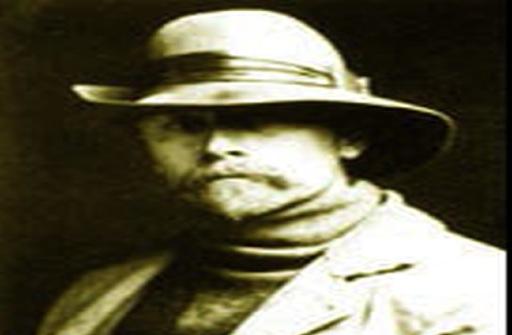
Edward Curtis & The Project
The man and the thirty-year endeavor
Edward Sherriff Curtis (1868–1952) spent thirty years documenting more than eighty Native American tribes — producing forty thousand photographs, ten thousand wax-cylinder recordings of music and verbal data, and twenty volumes of ethnographic text. The North American Indian was funded by J.P. Morgan, prefaced by Theodore Roosevelt, and the surviving copper photogravure plates were authenticated by Curtis's daughter Florence Curtis Graybill as the original plates — the only ones her father ever made.
Roosevelt's voice
"In Mr. Curtis we have both an artist and a trained observer, whose pictures are pictures, not merely photographs; whose work has far more than mere accuracy, because it is truthful. All serious students are to be congratulated because he is putting his work in permanent form; for our generation offers the last chance for doing what Mr. Curtis has done. The Indian as he has hitherto been is on the point of passing away. It would be a veritable calamity if a vivid and truthful record of these conditions were not kept."
The scale of the work
Curtis logged more than forty thousand miles in the course of nearly three decades, documenting Native American tribes west of the Mississippi and Missouri rivers. He traversed coastal regions and sunken deserts, forested mountains and the grasslands of the Great Plains. He worked with the permission of the tribes he photographed and the tribal members he interviewed, witnessing and recording cultural information that was not available to others before and has not been available since.
The endeavor documented:
- More than 120 different tribes
- Seventy-five distinct languages
- Approximately forty thousand photographic images
- Ten thousand wax-cylinder recordings of music, myths, and verbal data
- Twenty volumes of ethnographic text
The North American Indian as a published work
The printed edition consisted of twenty volumes of narrative text with smaller photogravures bound on pages opposite the text, accompanied by twenty separate large-format portfolios of loose photogravure sheets.
Each bound volume contained approximately seventy-five small-format photogravures (averaging 5.5 by 7.5 inches). Each accompanying portfolio contained around thirty-five larger gravures (averaging 12 by 16 inches). In total: 1,506 photogravures in the bound text volumes and 722 in the portfolios — 2,228 unique photogravure plate images across the entire work. No image appeared in both formats.
The volumes were sold by subscription only, priced at approximately $3,000 in 1907 and rising to $4,200 by 1924 — a prohibitive sum for all but the wealthiest private patrons and the most-established libraries. Curtis hoped to secure five hundred subscriptions. He achieved about 220.
The Morgan patronage
J.P. Morgan, the preeminent industrialist of his time, agreed to support the project with an initial $75,000 over five years. In 1910, he committed an additional $60,000 — this time not to Curtis personally, but to the newly formed North American Indian, Incorporated.
The relationship between patron and photographer was unequal. Curtis was obligated to raise additional funding by selling subscriptions, and the subscriptions never kept pace with what the project required. Each round of supplemental Morgan funding came with stricter conditions on ownership, control, and distribution rights.
By 1923, after a divorce, mounting financial obligations, and a project still incomplete after sixteen years of work, Curtis began transferring his copyright interests. By 1935, in a succession of documents, he had surrendered ownership of The North American Indian in its entirety — handing the enterprise to Morgan's successors so that the work could be completed.
This was not a foreclosure. It was a founder's choice: lose ownership, or lose the work entirely. Curtis chose the work.
The five presidents
The project spanned five presidential administrations after Roosevelt's. By the time the final volume on the Eskimo groups in Alaska was published in 1930, William Howard Taft, Woodrow Wilson, Warren G. Harding, Calvin Coolidge, and Herbert Hoover had each served — none of them as enthusiastic about the work as Roosevelt, himself a naturalist and explorer. The First World War diverted public attention. Cultural interest in Native America that had been intense in the early 1900s faded as the project dragged on.
By the late 1920s, when Curtis was completing his final volumes, the audience that had once been eager was distracted. The project was rediscovered only in the 1970s, when copies of The North American Indian in the basement of the Lauriat Company in Boston brought Curtis back into public consciousness.
What Curtis sacrificed
The thirty-year project cost Curtis his marriage, his home, and his health. The 1916 divorce destroyed many of his original glass-plate negatives. The financial demands forced him to surrender ownership of his life's work. He died in 1952, decades before the rediscovery that would establish his place in the canon of American photography.
He cast the work, throughout, as having "great national worth." Roosevelt agreed in 1907. The audiences of Curtis's own lifetime largely did not. The reassessment came after his death.
Florence Curtis Graybill
Edward Curtis's daughter Florence Curtis Graybill spent her own life advocating for her father's work and helping to ensure its survival. In May 1983, she authenticated the copper photogravure plates now in The Curtis Collection as the original plates from her father's project — "the only set of plates that have ever existed." Her letter remains the central document of authentication for these artifacts. View the letter →