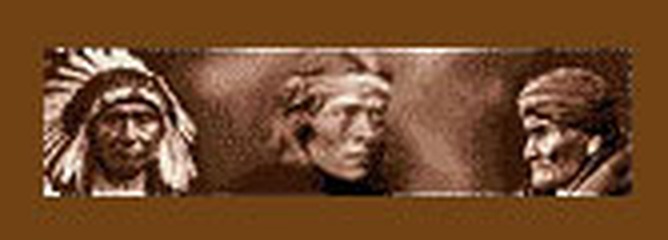
Cultural Importance
What these plates mean
The copper photogravure plates of The North American Indian are simultaneously artifacts of fine photography and instruments of cultural record. They document tribal life across the American West at a moment when many traditional ways of living were rapidly disappearing — and they remain, more than a century later, one of the most extensive visual archives of Native American culture from that era.
George Horse Capture
The late George Horse Capture — the first Native American to hold a senior position at the Smithsonian's National Museum of the American Indian — spoke about Curtis's work directly:
"Curtis's work gives Native Americans information on their own ancestors, which they are glad to have. Curtis's work provides Native Americans a bright light of knowledge and confidence that they might not have possessed prior to knowing his work; and we are thankful for his record."
His ancestor appears in the plate titled "Horse Capture."
Jeanne Eder Rhodes, PhD
Jeanne Eder Rhodes is CurtisCamp's cultural advisor — an enrolled member of the Ft. Peck Assiniboine and Sioux Tribes, a PhD in American History and Public History, and a retired Director of Native Studies at the University of Alaska, Anchorage. Through Jeanne, the collection has access to perspectives, language, and cultural framing that come from inside the tribes Curtis photographed — not as anthropological subjects, but as continuing peoples.
Read Jeanne's full biography & talk to our cultural expert →
What the plates preserve
Curtis worked with the permission of the tribes he photographed and the tribal members he interviewed, documenting:
- Daily life — dwellings, food, dress, work
- Language — recordings of seventy-five distinct languages
- Music — ten thousand wax-cylinder recordings of songs, stories, and myths
- Ceremony — religious practices, dances, burial customs
- Tribal organization — leadership, governance, social structures
- Material culture — baskets, pottery, tools, clothing
Each bound volume of The North American Indian includes an appendix summarizing the tribes documented in that volume, with text on language, dress, dwellings, food, arts and crafts, marriage, tribal organization, population, ceremonies, beliefs, medical practices, burial customs, and stories. The plates are the visual record; the volumes are the written record. Both are part of the same single endeavor.
A complicated reception
Curtis's work has not had a uniform reception. Within Native American communities, response has varied — some recognize the value of what Curtis preserved; others note that his images were curated, sometimes staged, and represent his vision of tribal life rather than its full reality. Both responses can be true at the same time.
Within academic and curatorial institutions, the response has been similarly mixed. Some institutions celebrate Curtis as a major American photographer; others critique him as an ethnographer of limited training and an artist who romanticized his subjects. Smithsonian and academic displays of Curtis material often pair the photographs with documentary images of the period's harsher realities to demonstrate that Curtis's "proud visions" were composed views, not comprehensive documentation.
CurtisCamp acknowledges this complexity. The plates preserve what Curtis saw, framed as he framed it, with his eye for composition and his decisions about what to include. They are evidence of one photographer's project over thirty years, not evidence of objective ethnography.
Why this matters now
The plates are now far enough from their moment of creation that they have become artifacts of two distinct histories: the cultures Curtis photographed, and the era of American documentation that produced him. They tell us about Native America in the early 20th century, and they tell us about the people who chose to record it.
Some of these plates have been returned to the tribes Curtis originally documented. Tribal placement attempts have not always succeeded — for reasons that include cultural-ownership questions, infrastructure for caring for high-value art, tribal politics, and resource constraints — but where placements have worked, the plates have rejoined the communities from which their images originally came.
The 10% donation policy on every CurtisCamp sale supports Native American causes chosen by the buyer. The collection has, throughout its operation, attempted to route value back toward the cultures whose images it preserves. The attempt has been partial, not complete.
Continuing work
Curtis is gone. The cultures he photographed have continued to evolve. The plates remain — small in number, irreplaceable, increasingly distant from their moment of creation. The work of these objects in the current era is to be displayed, studied, and held in trust by people who understand what they are.
What they are is the most evolved physical record of Edward Curtis's project. What they preserve, they preserve permanently. What they cannot show, they cannot show. Both facts are part of their honest meaning.